The Alchemic Tension: Dior’s Masai Legacy in a Lo-Fi Lens

From the 1997 Runway to the Modern Asphalt
The Language of the Street: A New Visual Dialectic
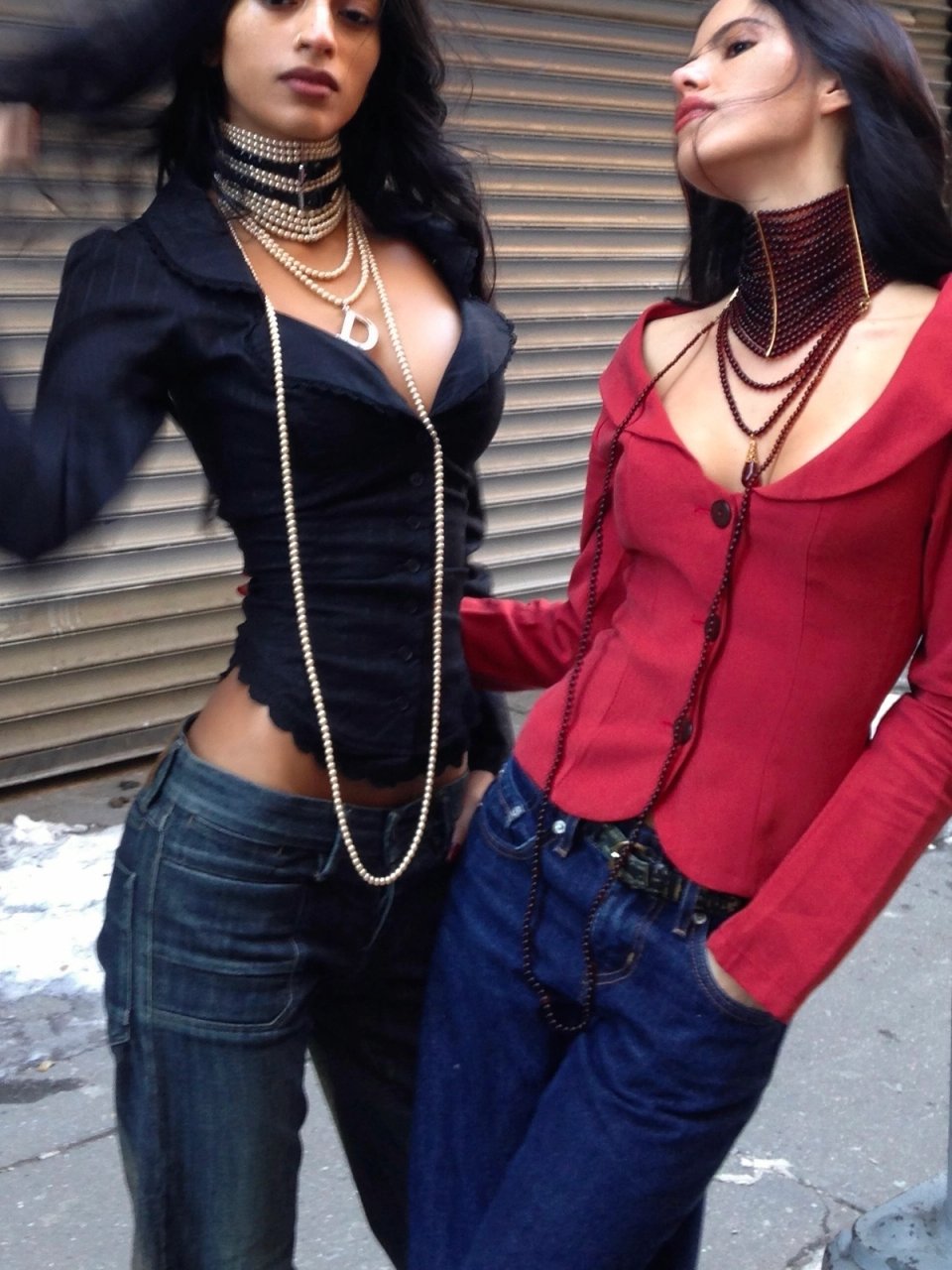
Fashion photography is currently undergoing a massive "vibe shift." We are moving away from the over-polished, hyper-retouched studio era and retreating into the raw, honest grain of the iPhone 5 aesthetic. It’s a return to the "Indie Sleaze" energy of the early 2010s, where the flash is harsh, the background is a shuttered storefront, and the clothes are doing the heavy lifting.
In this editorial, the romanticism of the past is stripped away. We’ve traded the fragility of lace for the structured rebellion of plunging button-downs and low-slung denim. This is "Off-Duty Muse" dressing—a uniform that feels lived-in and accidental, yet hyper-curated. The silhouettes are sharp, defined by scalloped hems and deep necklines that serve as a stage for the main event: the neck.
The Dior Masai Choker: A Study in Sculptural Power
At the heart of these images lies an unmistakable icon of the John Galliano for Dior era. The Masai-inspired choker isn’t just jewelry; it’s an architectural intervention. It demands a specific posture—shoulders back, chin up, eyes forward.
The Historical Context
These pieces are direct descendants of Galliano’s seminal Fall/Winter 1997 Couture and Ready-to-Wear collections.
- The 1997 Debut: In his first couture show for the house, Galliano merged Dior’s "New Look" bar jackets with the elongated silhouettes and stacked beadwork of the Maasai people of East Africa.
- The Cultural Dialogue: It was a collection that redefined "Global Chic," though it remains a focal point for modern discussions on cultural appropriation versus appreciation.
- The 2000s Revival: These chokers saw a resurgence during the Spring/Summer 2004 "Egypt" collection and various iterations throughout the early 2000s, solidifying them as "Archival Grails" for collectors today.
Against the casual backdrop of a city street, the choker’s rigid, stacked beads create a striking dissonance. It’s the ultimate high-low flex: pairing a piece of fashion history with the kind of vintage denim you’d wear to a basement show.
Two Muses: A Contrast in Chrome and Garnet
The editorial follows two distinct interpretations of this archival power, showing how the same accessory can shift an entire identity.
Muse I: The Pearlescent Rebellion
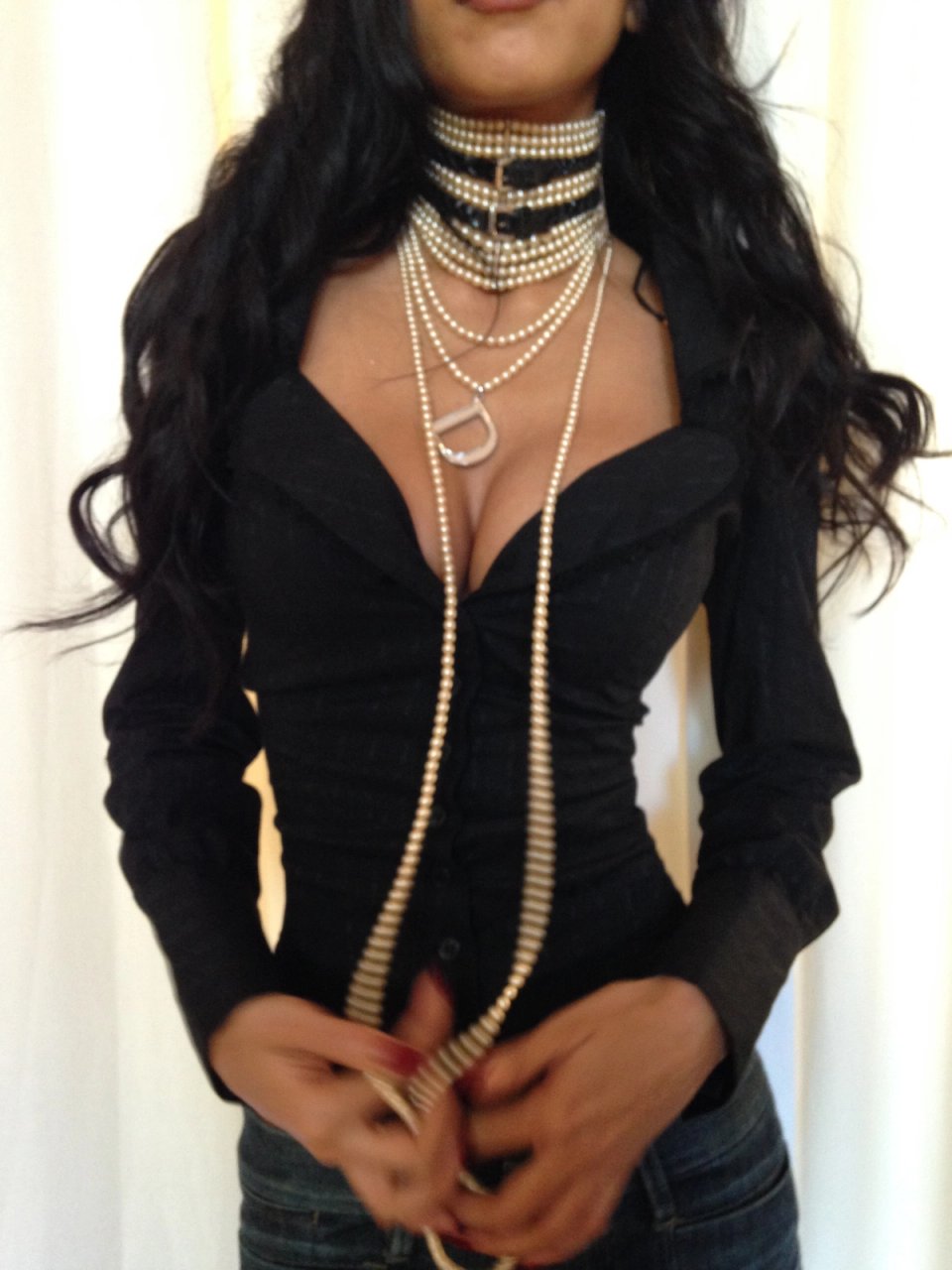
On our first muse, the tiered white pearls and the oversized "D" pendant (a hallmark of the early 2000s "Logomania") bring a classic brightness to a structured black top.
- The Vibe: Graphic, high-contrast, and unapologetic.
- The Styling: By pairing the pearls with dark-wash jeans and a deep-V shirt, the look avoids being "preppy." Instead, it feels like a modern update on the 90s club kid—regal but street-ready.
Muse II: The Garnet Sentinel
The second muse leans into a moodier, more grounded palette. Her choker—a towering stack of deep crimson beads—follows the curve of a blood-red structured jacket.
- The Vibe: Monochromatic tension.
- The Styling: Here, the jewelry feels less like an adornment and more like armor. It mimics the lines of the jacket's collar, creating a seamless flow from the body to the jawline. It’s protective, personal, and incredibly dense.
The Styling Takeaway: Refined Grit
This pairing serves as a masterclass in Refined Grit. It proves that you don't need a red carpet or a professional lighting rig to wear a piece of history. By stripping away the "preciousness" of the Dior Masai choker and placing it in a raw, urban context, the jewelry actually gains more narrative weight.
It is no longer a museum piece; it is a living, breathing part of a modern wardrobe. The lesson here is simple: the most interesting fashion happens in the friction between the extraordinary and the everyday—where the luxury of the 1997 runway meets the cold concrete of 2024.