The Evolution of the Chanel Dustbag: A Collector’s Guide from the 1980s to Today
The Fabric of Luxury: A Comprehensive History of Chanel Dustbags (1980–2026)
When we discuss the house of Chanel, the conversation usually centers on the buttery lambskin of a Classic Flap or the intricate weave of a seasonal tweed. Yet, there is a silent guardian that has accompanied every authentic piece for decades: the dustbag. To the untrained eye, it is a simple cloth pouch. To the dedicated collector and the seasoned authenticator, the dustbag is a time capsule that reveals the era, the intention, and the craftsmanship of the House of Chanel.
The 1980s: The Era of Functional Simplicity
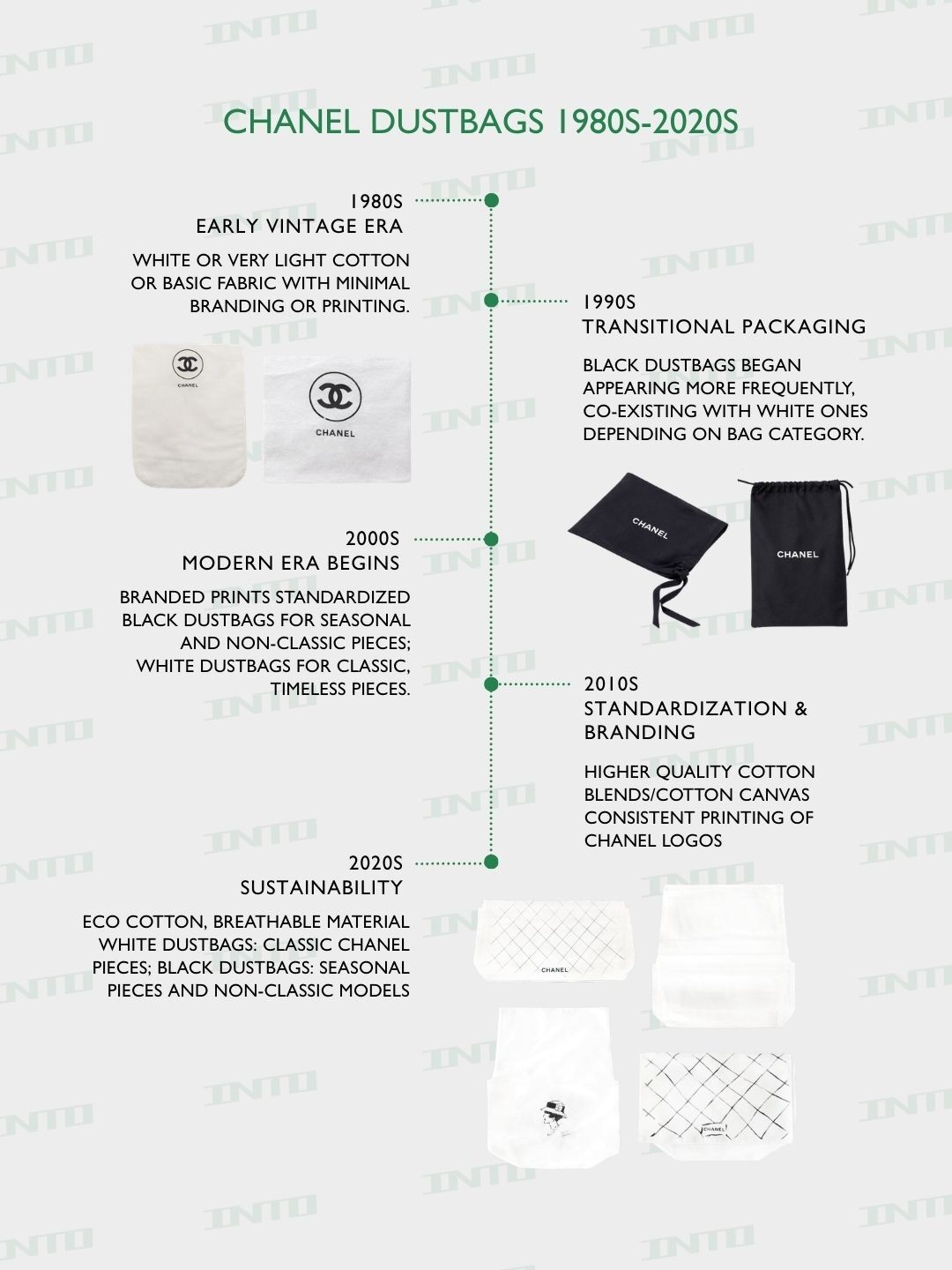
In the early vintage era of the 1980s, Chanel’s packaging reflected a world before the "luxury experience" became a digitized, global phenomenon. During this decade, dustbags were primarily functional rather than branded accessories. They were crafted from white or very light cream cotton, often with a texture that felt more like a basic bedsheet than a high-end textile.
The branding during this time was remarkably modest. You might find a small, sewn-in tag or a light, almost translucent screen print of the Chanel name. There was no "standard" look because the bag was the star, and the pouch was merely a tool to prevent color transfer and scuffing in a woman's closet. If you find a bag from 1985 today, its original dustbag likely feels thin and unpretentious, lacking the heavy weight we associate with modern luxury.
The 1990s: A Decade of Transition
As Karl Lagerfeld began to truly reshape the brand’s identity in the 1990s, the packaging followed suit. This was the birth of "Transitional Packaging." While white cotton remained common, we began to see the introduction of black dustbags. This shift often depended on the category of the item—shoes and small leather goods might come in one color, while larger handbags came in another.
The logos started to gain a bit more prominence, though they remained relatively small compared to the "Logomania" that would follow. The material stayed rooted in simple cotton, but the weave became slightly tighter and more durable. This decade is often the most confusing for collectors because of the lack of strict uniformity; it was an era of experimentation as the brand figured out its modern visual language.
The 2000s: The Modern Era and the Microfiber Revolution
By the turn of the millennium, the "Modern Era" of Chanel packaging had officially begun. This is when the Chanel logo and the iconic Serif font became the standardized giants we recognize today. The 2000s saw a massive shift in textile technology. Chanel moved away from basic cotton and began using microfiber blends.
These microfiber bags felt "slicker" and more high-tech. They were designed to be incredibly soft to prevent even the slightest micro-scratches on delicate patent leather or high-shine lambskin. This was also the era where black became the dominant color for the majority of the line. The dustbag was no longer just a pouch; it was a branded statement that said "I am an authentic Chanel product" from across the room.
The 2010s: Standardization and the Great Divide
The 2010s brought a very specific hierarchy to the Chanel unboxing experience. This decade is defined by the "Standardization & Branding" phase. Collectors began to notice a clear divide: the White Dustbag vs. the Black Dustbag.
White dustbags, often featuring a flap closure and a drawing of Coco Chanel herself (sometimes called the "Karl Lagerfeld sketch" bags), were reserved for the "Icons"—the Classic Flap, the 2.55 Reissue, and other timeless pieces. Black dustbags, usually with a simple drawstring, were used for the more avant-garde seasonal pieces, Boy Bags, and Gabrielle bags. The material during this time shifted toward a very heavy, high-quality cotton canvas. These bags were thick, sturdy, and felt expensive to the touch, mirroring the price increases seen across the boutique floors.
The 2020s: The Pivot to Sustainability
As we moved into the 2020s, the global conversation shifted toward environmental responsibility, and Chanel responded. Starting around 2022, the brand began phasing out the microfiber blends of the 2000s in favor of more eco-friendly, breathable cotton.
The current 2020s era is defined by "Sustainability." These modern dustbags are designed to let the leather "breathe," which is crucial for preventing mold or dryness in humid climates. While the classic white-for-icons and black-for-seasonal rule still largely applies, the textures have become more organic. Today’s dustbags feel less like synthetic tech-wear and more like high-end organic linen. They are a nod to the brand's heritage while looking forward to a future where luxury doesn't have to mean a heavy carbon footprint.
The Anatomy of an Authentic Dustbag
For the serious collector, the dustbag is a primary tool for authentication. A genuine Chanel dustbag will always have clean, straight stitching. The font should be crisp, never "fuzzy" or bleeding at the edges of the ink. Most importantly, the material should feel substantial. Counterfeiters often spend their budget on the bag itself and cut corners on the packaging, resulting in dustbags that feel "scratchy," overly shiny, or paper-thin.
When you hold a Chanel dustbag from any of these eras, you aren't just holding a piece of fabric. You are holding forty years of fashion history—a testament to how the House of Chanel protects its legacy, one stitch at a time.