Why This Dsquared2 Skirt Signals a 2026 Shift
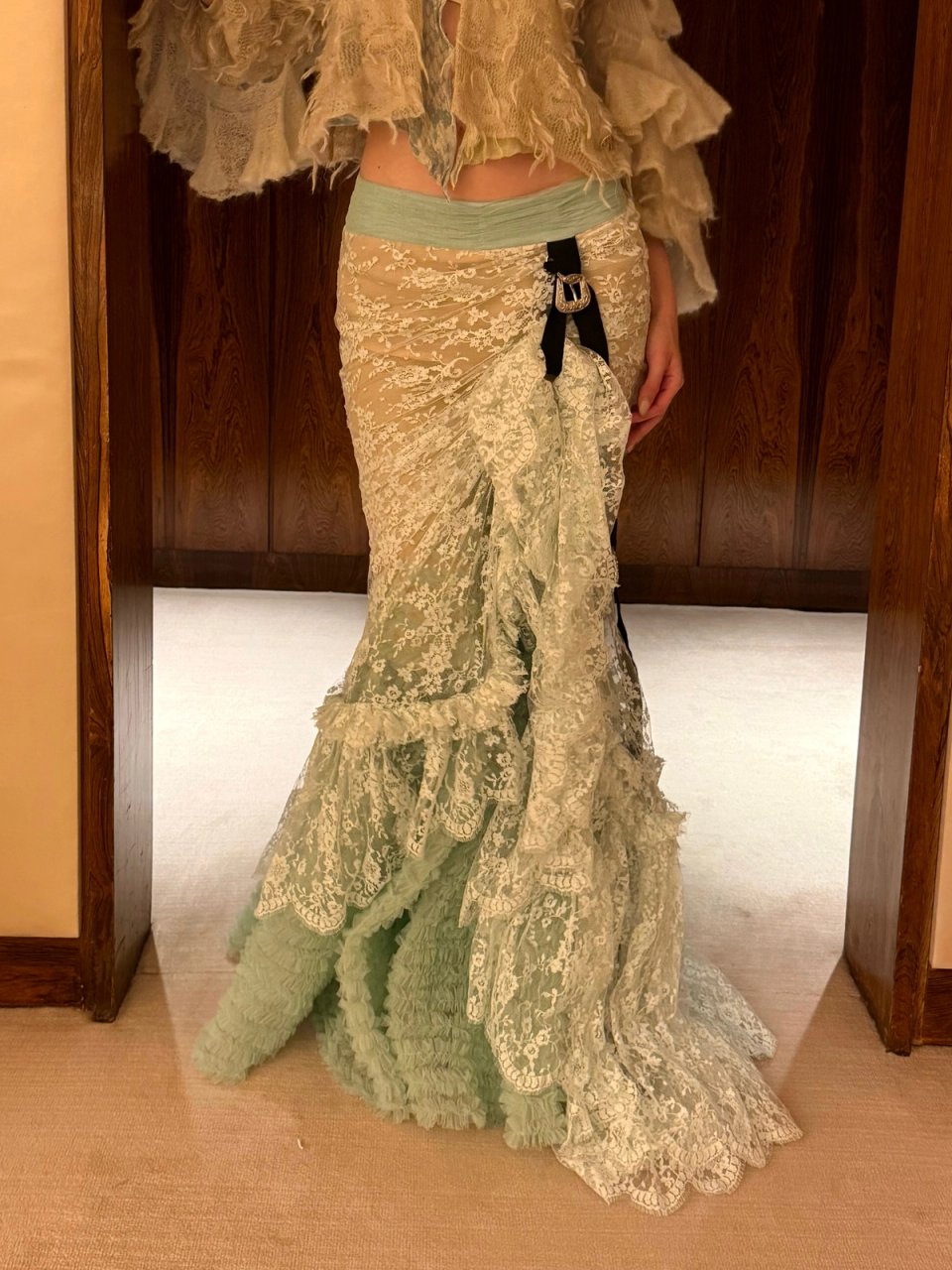
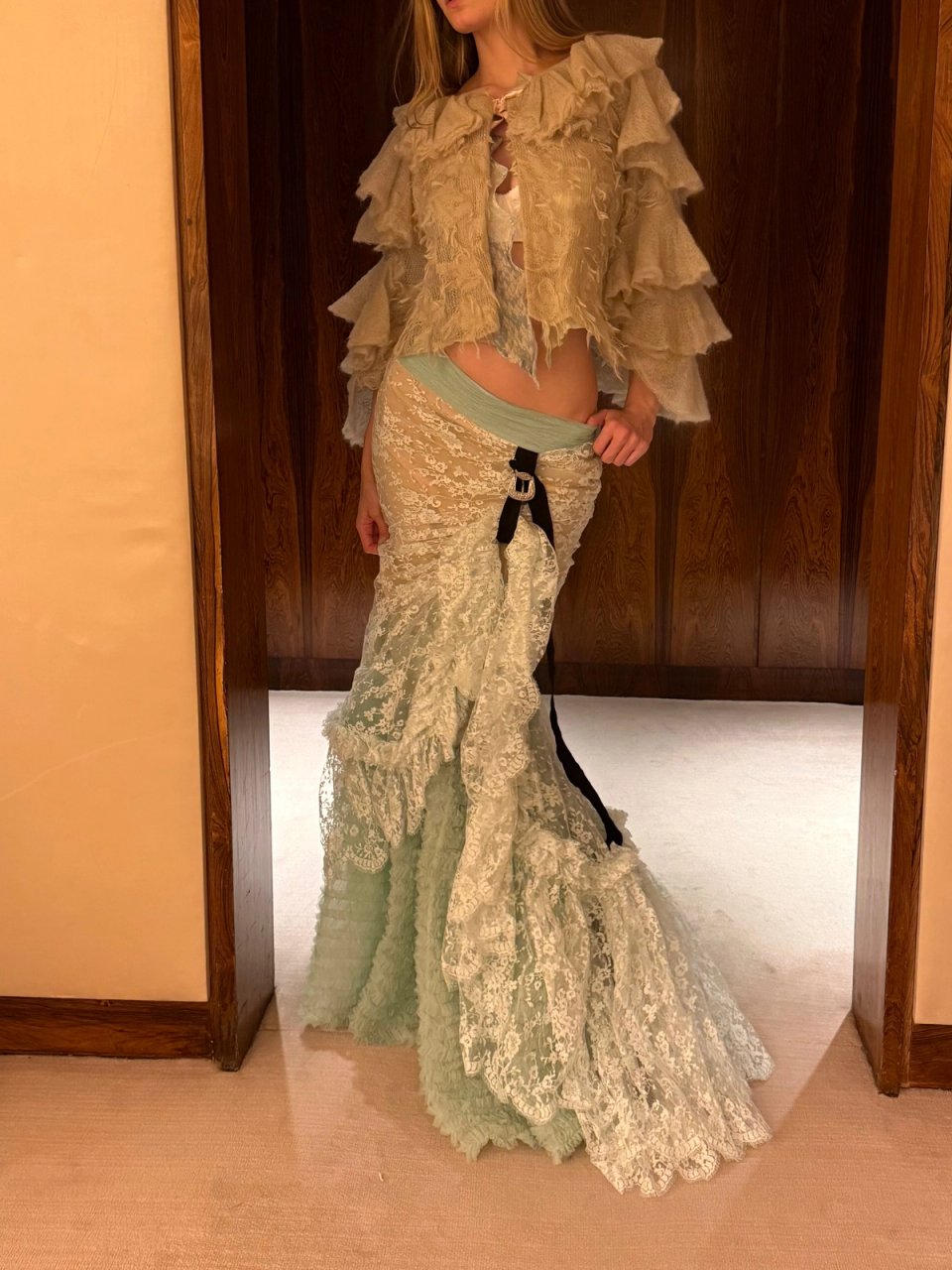
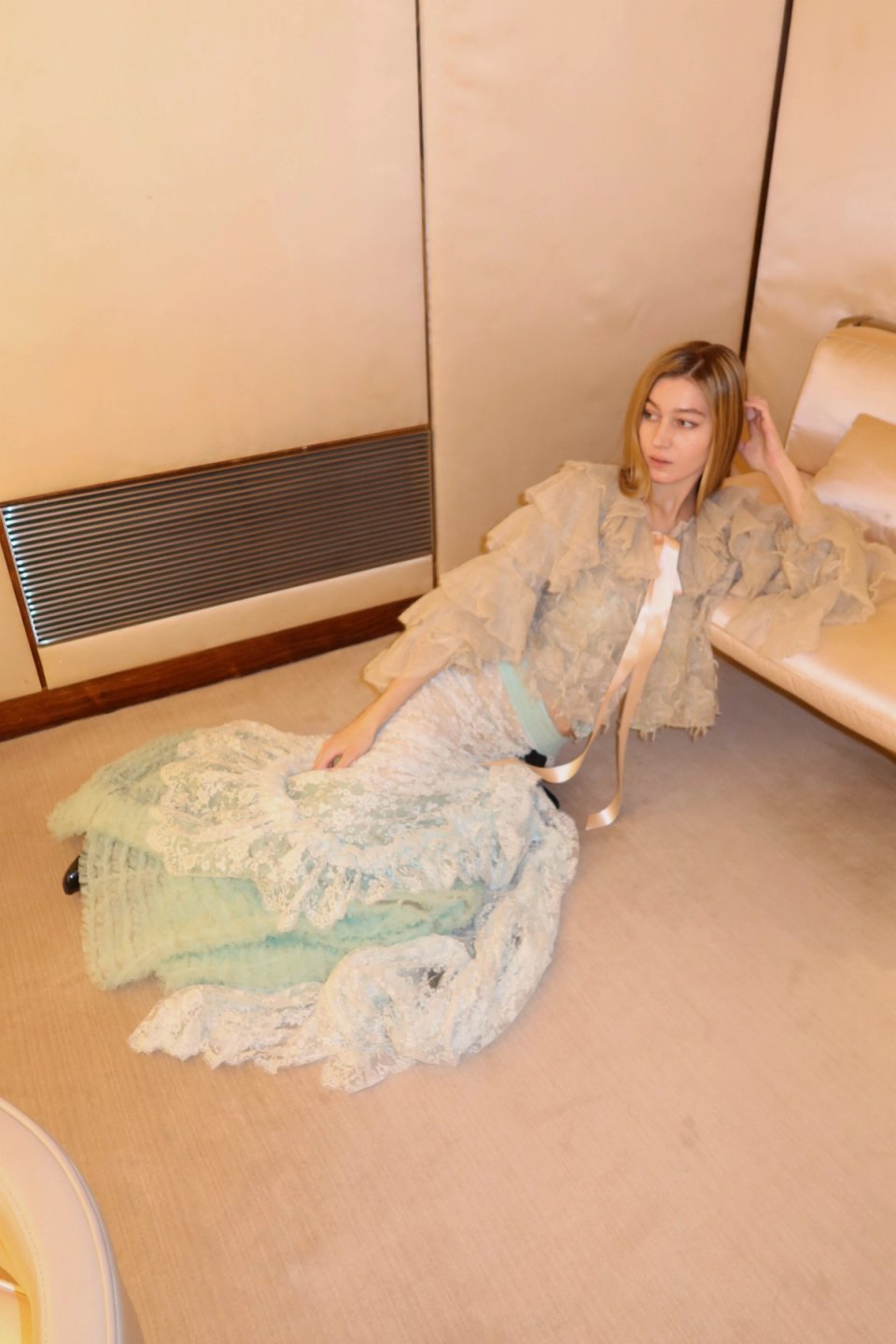
At first glance, this Dsquared2 skirt reads as romantic and almost archival—layers of delicate lace, soft sheerness, and an intentionally undone construction that feels closer to couture than contemporary ready-to-wear. Yet its recent virality has little to do with nostalgia alone. What makes this piece resonate so strongly right now is something more fundamental: difficulty. In a fashion landscape dominated by speed, replication, and digital flattening, garments that visibly require time, skill, and human labor are once again commanding attention.
As we approach 2026, fashion is undergoing a quiet but decisive recalibration. The appetite for minimalism—clean lines, neutral palettes, easily reproducible silhouettes—has reached saturation. In its place, consumers are gravitating toward pieces that feel materially intelligent, garments where the value is immediately legible in the textile itself. This skirt exemplifies that shift. Its layered lace, ruched volume, asymmetrical draping, and fragile finishes resist mass production and shortcut manufacturing. The garment looks expensive not because it is branded as such, but because it appears inherently hard to make.
That sense of complexity is precisely what has propelled this skirt into virality. On social platforms increasingly flooded with AI-generated imagery and hyper-efficient fashion cycles, pieces that are difficult to explain, difficult to reproduce, and difficult to perfect stand out. The skirt’s construction invites closer inspection; it moves unpredictably, photographs dynamically, and refuses to be reduced to a single trend label. In this way, it aligns perfectly with the current algorithmic economy—rewarding garments that feel layered, nuanced, and visually dense rather than immediately consumable.
Lace, in particular, has re-entered the fashion conversation, but in a markedly different form than in past decades. This is not the polished, decorative lace of the 2010s, nor the overtly feminine revivalism often associated with romantic dressing. Instead, lace is being used structurally—raw, layered, and slightly unresolved. In this Dsquared2 skirt, the softness of the lace is deliberately disrupted by contrast: utilitarian hardware, asymmetry, and uneven draping introduce tension, grounding the romance in something sharper and more modern. This interplay between fragility and strength is a defining characteristic of where 2026 aesthetics are headed.
Dsquared2 has long occupied the space between excess and precision, but what makes this piece especially relevant today is how effortlessly it aligns with the current cultural moment without appearing engineered for it. This is not a garment designed to chase virality; rather, it became viral because it reflects a broader correction happening within fashion. Consumers are no longer responding to sameness or perfection. They are seeking specificity, texture, and evidence of craft—qualities that this skirt delivers instinctively.
Ultimately, the renewed appeal of pieces like this signals a larger shift in how luxury is being defined. As visual literacy increases and audiences become more discerning, garments that carry visible labor and technical difficulty are emerging as status symbols in their own right. This Dsquared2 skirt is not simply a trend piece or a fleeting moment—it is a marker of what’s to come. Craft is reclaiming its value, complexity is becoming desirable again, and materials are once more at the center of the conversation. For 2026, that return to difficulty may be fashion’s most important evolution.